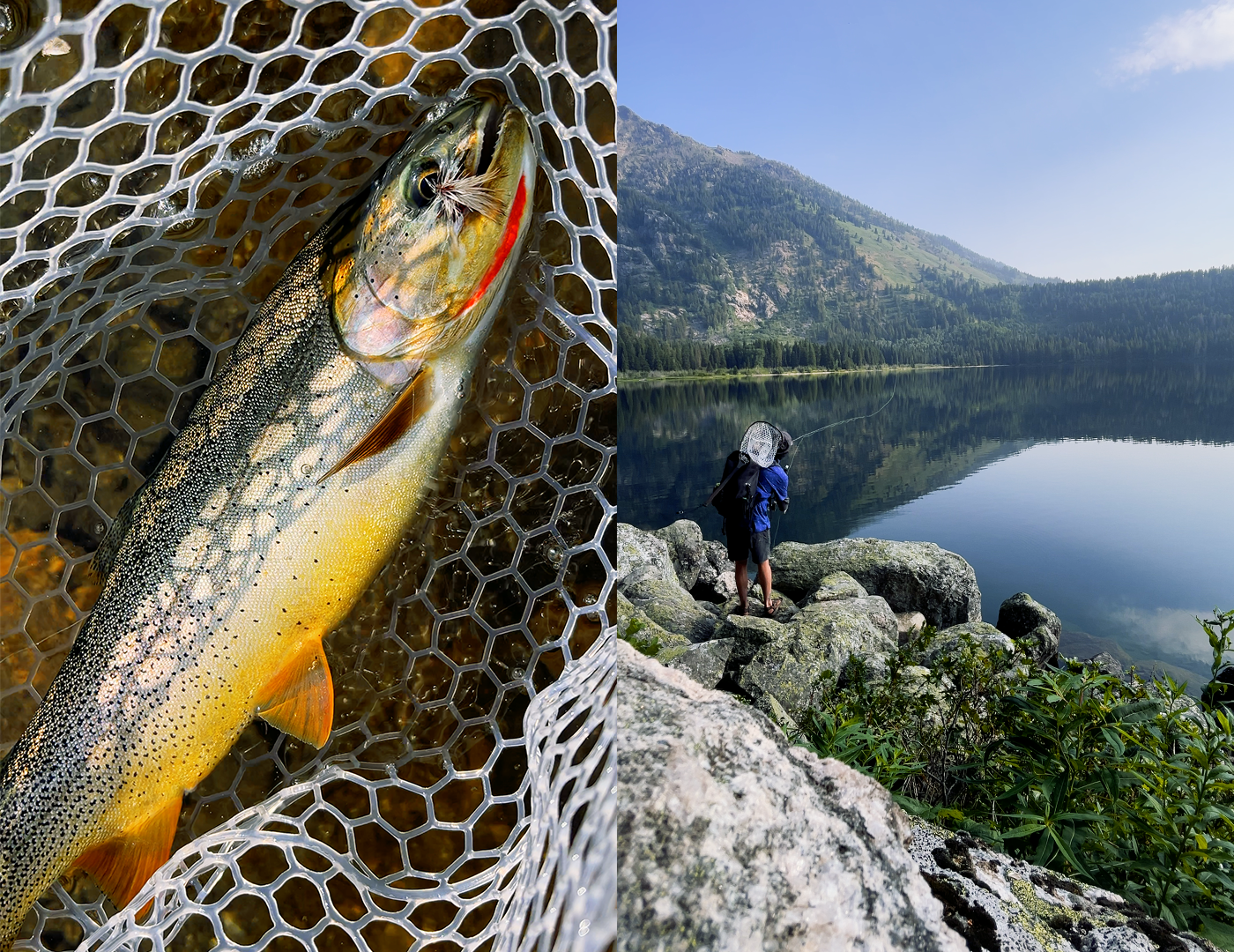
There are three reasons to set your alarm and head to Phelps Lake early. First, to arrive at the Laurence Rockefeller Preserve parking lot before it fills up, which can happen as early as 8:30 am in the busy summer months. Second, to allow yourself plenty of time to hike the mile and a half to the lake. And third, to be on the water for an excellent morning bite. Phelps Lake is home to voracious cutthroat trout that feed on the surface during the morning hours and become less active as the hot afternoon approaches. Bring your favorite five-weight rod as the cutthroat trout in this glacial lake typically range from twelve to fifteen inches.
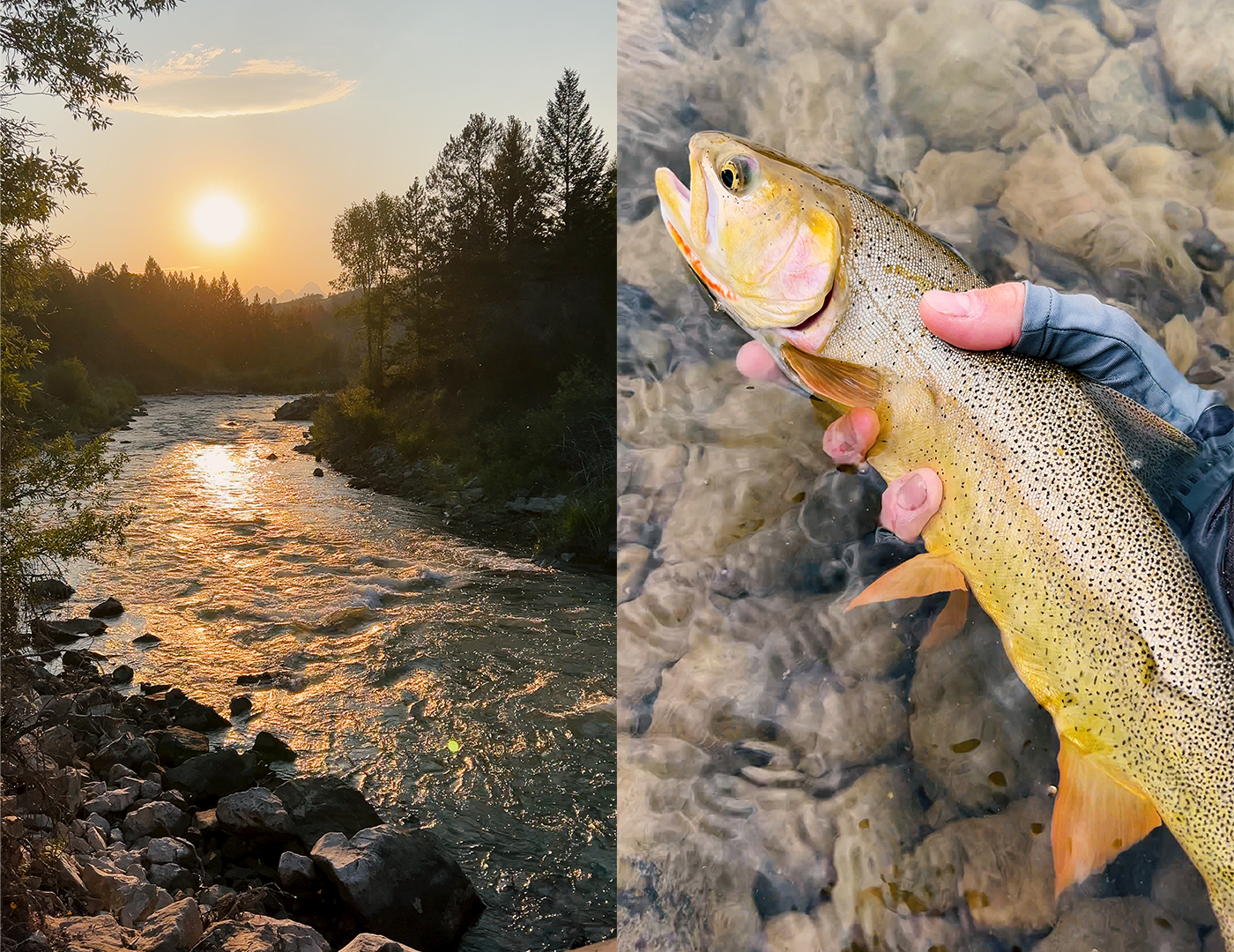
While the Gros Ventre River is a tributary of the Snake River, most of the fishing pressure occurs in the lower section. Starting from the Gros Ventre Campground upstream to the "Kelly Cliffs" area and beyond offers beautiful fly-fishing opportunities for adventurous anglers. During the summer months, trout will eagerly devour terrestrial insects in this section of the river, offering some of the most exciting hopper-dropper fishing in Grand Teton. The Gros Ventre flows through both private and public lands, so it's important to do your research before heading out to fish.
Fly Recommendations: Foam Body Salmon Flies & Chubby Chernobyls for your hoppers, bead-head Pheasant Tail & purple Duracell nymphs for your droppers.
3. Lake Solitude
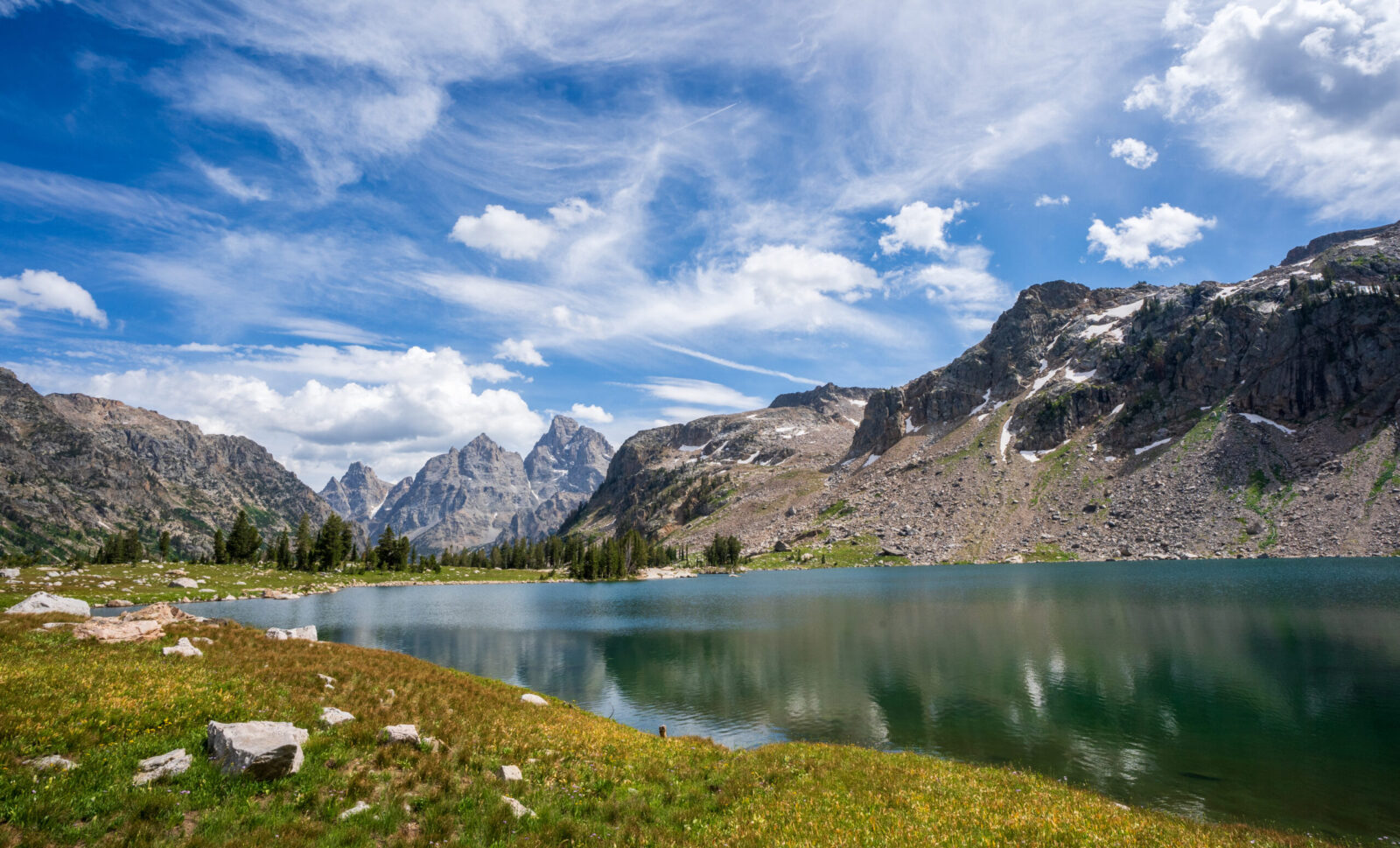
The out-and-back hike to Lake Solitude is approximately sixteen and a half miles and will reward you with one of the best alpine fishing experiences in Grand Teton National Park. Expect to hike through a stunning canyon with several alpine waterfalls, vibrant patches of native wildflowers, and views of the immense peaks of the Teton mountain range. Although the hike is notably long, the beautiful and hungry cutthroat trout in the lake make it well worth the effort. Fishing is most productive in the morning and evening, with some success in the afternoon. Bring extra water and bear spray for this backcountry fly-fishing adventure.
Fly Recommendations: Pretty much whatever you have in your fly box. Hopper Droppers with medium/small Chubby Chernobyls & purple Duracell nymphs have worked great here.
Cutthroat CO-OP
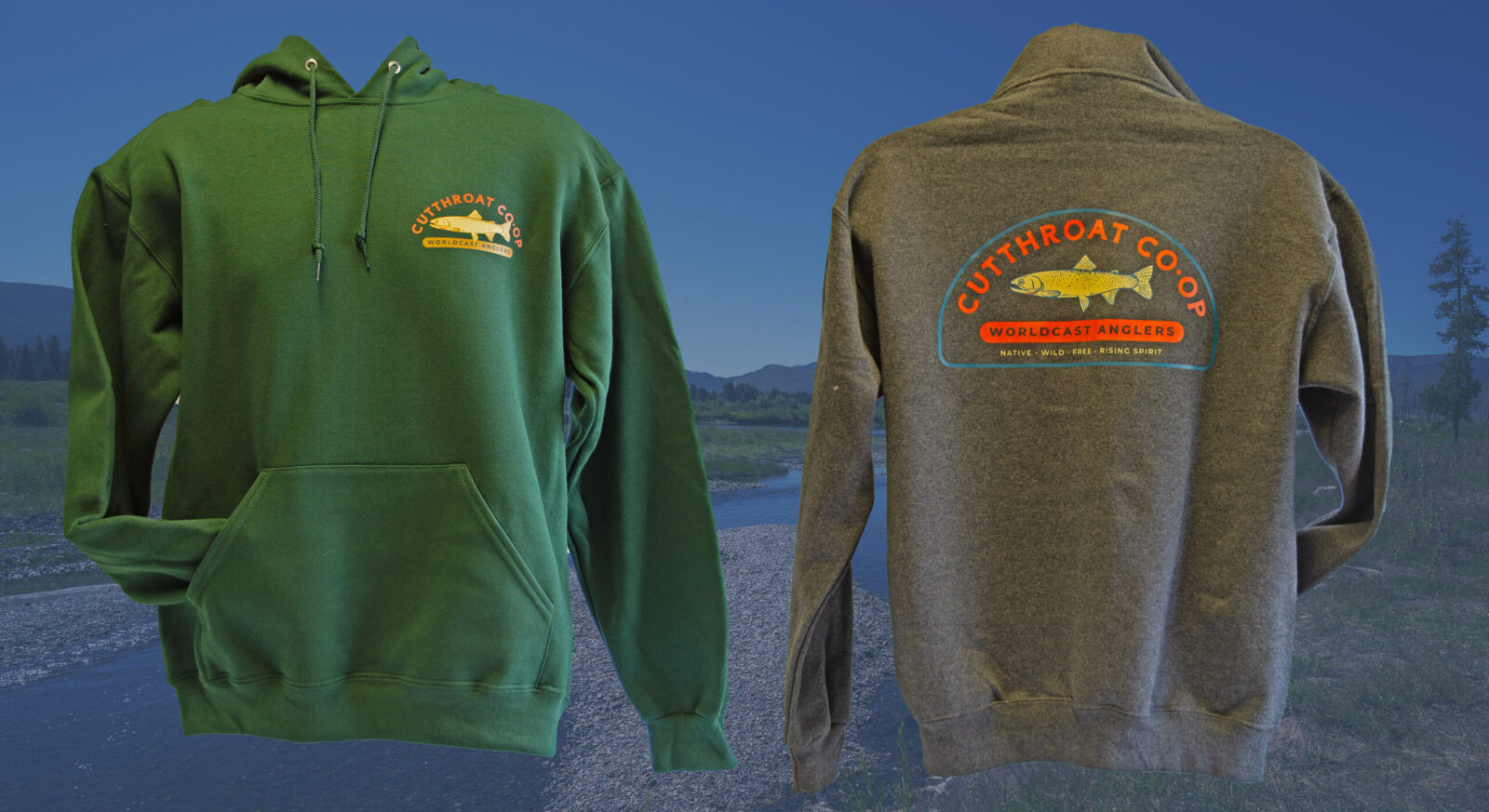
We are proud of our partnership with WorldCast Anglers, a local Grand Teton National Park fly fishing outfitter and concessionaire. WorldCast created a line of Cutthroat CO-OP merchandise based on the iconic Snake River trout. The gear covers all the basics to look good on and off the river, with an array of hats, T-shirts, hoodies, and more.
A portion of proceeds from all Cutthroat CO-OP merchandise sales will support Grand Teton National Park Foundation's native fish conservation program. Visit WorldCast's website to learn more about the company and the Cutthroat CO-OP collection, and stop by their shop in Victor, Idaho (or call 1-800-654-0676) to get some gear before it is gone!
We'd like to extend our thanks to the entire team at WorldCast for their incredible support and all they do to steward the Snake River watershead and protect native fish.
Grand Teton National Park Foundation has been supporting the park for several years with native cutthroat trout conservation efforts. From restoring fish passage to natal streams to funding underwater video cameras to track population dynamics, visit this page to see our contributions to this initiative.
Luke’s Wings is a nonprofit organization that provides emergency travel planning services and airplane tickets for the families and loved ones of wounded, ill, and injured service members, Veterans, and fallen officers during hospital recovery and rehabilitation. Our work helps active service members and Veterans maintain crucial connections in their lives. Call us at (512) 971-9748 to give back with complimentary plane tickets.
Below, we list several organizations through which you can show military caregivers your appreciation:
Operation Frontline Families
Operation Frontline Families (formerly Caregivers on the Homefront) provides support services and resources to military families caring for wounded service members. Their offerings include mental health therapy, counseling services, and management support to help ease the burden on these dedicated individuals. Your donations can help military caregivers access the necessary resources to care for their loved ones and themselves.
Elizabeth Dole Foundation
Committed to empowering and supporting military caregivers, The Elizabeth Dole Foundation works through various initiatives and programs. It provides education, advocacy, and community-building opportunities for caregivers nationwide. By donating to their foundation, you can help raise awareness about the challenges military caregivers face and help them receive the support they deserve.
Fisher House Foundation
The Fisher House Foundation operates a network of comfort homes where military families can stay without cost while their military loved ones receive medical treatment. These homes provide a supportive environment for caregivers, allowing them to focus on caring for their injured or ill loved one without worrying about lodging expenses. Your donations can help fund the operation of these homes and ensure military caregivers have a place to stay during challenging times.
National Military Family Association
Finally, the National Military Family Association offers a range of programs and services designed to support military families, including caregiver support resources. They provide scholarships, benefits information, and advocacy efforts to improve military families’ livelihoods nationwide. By donating to this organization, you can help military caregivers gain access to vital resources that lighten their load and improve their well-being.
Gift Complimentary Military Flight Deals with Luke’s Wings
Military caregivers deserve recognition for their selfless dedication and sacrifices. By donating to organizations like Luke’s Wings, you can show appreciation for these unsung heroes and make a tangible impact on their lives. Your contributions can help provide military flight deals to our Nation’s Heroes when they need it most. Call us at (512) 971-9748 to gift complimentary military flights to a caregiver.
Transmission lines running across the mountain west | Photo by POW Creative Alliance member Sara Robbins
The IRA creates strong incentives for building these essential clean energy projects. However, it does not streamline the permitting process, squandering a real opportunity, particularly for offshore wind, onshore wind, and large-scale and rooftop solar. Addressing these permitting issues is essential to unlock the full potential of clean energy infrastructure.
State-level Implementation: A crucial area for IRA’s success is state level implementation. While the IRA incentives are federal, whether these funds go into a supportive or restrictive state environment depends on state policies. State electricity regulators at the 50 public utility commissions play a vital role in this. The progress of the IRA—and its emissions reduction and environmental justice goals—hinges on how these regulators approve new projects and the factors they consider.
State regulators can empower consumers who want to take a more active role in their communities, by becoming not just consumers, but also producers of energy, aka “prosumers.” This means taking advantage of the IRA’s support to install solar panels, heat pumps, battery storage, and electric vehicles. The more consumers can access information, sell power to the grid, and store it in their car batteries, the more likely the IRA will succeed.
Local and state rules are consequential in these decisions. For example, installing solar in the US costs more than three times as much as in Germany and Australia. The panels are the same, and the tariffs are a little higher, but the main difference is an unsupportive regulatory environment. The IRA provides a major push, but state regulators need to support it rather than maintain outdated rules and decisions that hinder progress, even for highly motivated households benefiting from the IRA.
Envisioning an IRA 2.0
It’s not too soon to start thinking about an IRA 2.0, which would extend key aspects, correct any adverse incentives, and engage more globally. This next phase should also provide stronger encouragement for states to facilitate progress, and most importantly, build on all the remarkable advancements made in the US over the past 2 years. By refining and expanding the IRA, we can ensure continued momentum in reducing emissions and further strengthen our clean energy future.
Author: Greg Nemet
Gregory Nemet is a Professor at the University of Wisconsin–Madison in the La Follette School of Public Affairs. He teaches courses in policy analysis, energy systems, and international environmental policy. Nemet’s research focuses on understanding the process of technological change and the ways in which public policy can affect it. He received his doctorate in […]
The decline in neotropical migratory bird populations can be attributed to numerous factors, but the most significant cause is the loss and fragmentation of their habitats. Human activities, including agricultural expansion and deforestation, have severely affected these habitats, disrupting the birds’ life cycle. The Western Andes of Colombia, home to these incredible birds during the winter, faces a dual threat from climate change and population growth. Climate change compounds the effects of habitat fragmentation and deforestation, making it crucial to address these issues urgently.
Habitat loss in the Andean region is driven primarily by practices like agriculture and forest clearing for livestock. Recent accessibility to forested areas after a peace agreement in Colombia has only exacerbated this issue. Cerulean Warblers and Canada Warblers are particularly at risk due to the loss of suitable wintering habitat, while the deforestation of the Northern Andes poses a significant threat to Olive-sided Flycatchers and other avian species.
The Proposed Solution: Reforestation and Habitat Restoration
The Mesenia-Paramillo Nature Reserve in the Western Andes of Colombia has become a crucial focal point for conservation efforts. Saving Nature has partnered with Fundacion Bioconservancy to restore habitat for neotropical migratory birds in the area and engage local communities in these restoration efforts. By reforesting and protecting winter habitat, the project addresses a critical factor in the declining population trends of these remarkable birds.
The project focuses on five priority neotropical migratory birds native to the area: Canada Warbler, Cerulean Warbler, Mourning Warbler, Olive-sided Flycatcher, and Swallow-tailed Kite. These species are threatened by persistent habitat loss and fragmentation in their non-breeding grounds. Reforestation with native trees serves to counteract these threats by increasing habitat availability and connectivity, thus reducing mortality during the non-breeding season and improving conditions for spring migration and breeding.
Since the project’s inception in 2008, we have secured 3,845 hectares of land, of which 308 hectares are earmarked for restoration with native trees. The rest remains intact forest. This high-elevation forest is vital for species like Canada Warblers, which winter in areas between 500-2,500m. Over the next five years, the project aims to reforest 594 hectares with over 650,000 native trees to increase neotropical migratory bird habitat. As of 2019, they have already restored 183 hectares, with plans to restore an additional 100 hectares in 2024 by planting around 120,000 native trees.
Where You Come In
Reforestation efforts in the Western Andes of Colombia are providing a beacon of hope for neotropical migratory birds facing population declines. By restoring their winter habitat and actively engaging local communities, the project is contributing to the survival of these incredible birds. Furthermore, these conservation actions are in line with the growing global interest in tree planting initiatives, which play a vital role in combating climate change, protecting biodiversity, and ensuring a sustainable future for all.
Supporting initiatives like this, whether through direct involvement or financial contributions, is not only beneficial for neotropical migratory birds but for our planet as a whole. It’s a reminder that when we take action to protect the environment, we are planting the seeds of a better future for ourselves and generations to come.
Why Your Donation Matters
Your donation plays a pivotal role in the ongoing efforts to save neotropical migratory birds by restoring their winter habitat in the Western Andes of Colombia. Here’s why your support is so crucial:
Habitat Restoration: The primary focus of this project is the restoration of critical winter habitat for neotropical migratory birds. Your donation directly contributes to planting native trees and creating healthier, more connected habitats for these migratory birds. By increasing habitat availability, you help provide the food, shelter, and safety that neotropical migratory birds need during the non-breeding season.
Biodiversity Conservation: neotropical migratory birds are not the only beneficiaries of this restoration effort. The increased tree planting and habitat restoration also benefit the broader ecosystem. Many other species, both flora and fauna, rely on these habitats, and your donation supports the protection of this diverse ecosystem.
Climate Change Mitigation: Trees are essential in the fight against climate change. They capture and store carbon dioxide, helping to mitigate the impacts of climate change. By supporting reforestation efforts, your donation contributes to a healthier planet for both neotropical migratory birds and people alike.
Global Migration: neotropical migratory birds play a critical role in ecosystems on both sides of their migration routes. By supporting their winter habitat, you’re helping ensure the continuation of these incredible long-distance journeys that connect continents. This not only contributes to biodiversity but also our understanding of the planet’s interconnectedness
Your report is anonymous, except if you're reporting an intellectual
property infringement. If someone is in immediate danger, call the
local emergency services - don't wait.
Report Story
Any Additional Notes
Your report is anonymous, except if you're reporting an intellectual
property infringement. If someone is in immediate danger, call the
local emergency services - don't wait.
Report Story
Thanks for letting us know
We use these reports to:
Understand problems that people are having with different types
of content on CauseCircle
Show you less of this kind of content in the future
Share this story
Twitter
Facebook
LinkedIn
WhatsApp
Reddit
Telegram
Pinterest
Email
Page link
Please Sign In to continue
Edit Story
Delete Story
Are you sure you want to delete this story? This action cannot be undone.