Story Information
Story Statistics
2,345 Reads
80 Shares
320 Likes

1 year ago
Good Things Come in Trees at the Eustis Estate
When is the best time to plant a new tree? Ask any tree lover, and they might dig into the particulars of soil temperature, precipitation patterns, and hardiness zones. Or – they might wax philosophical. “The best time to plant a tree was twenty years ago,” says a favorite proverb of landscape architects, “and the second-best time is now.”
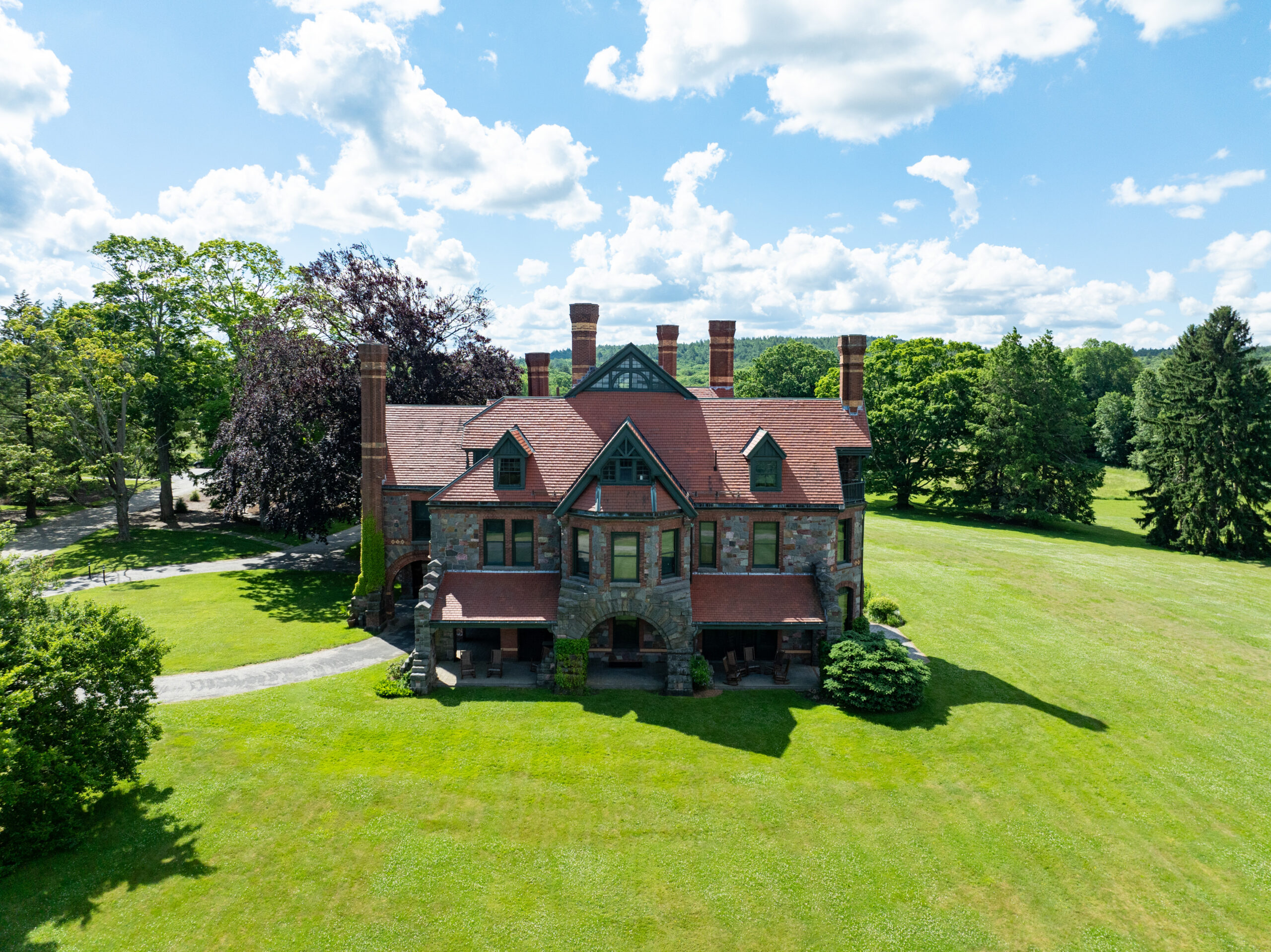
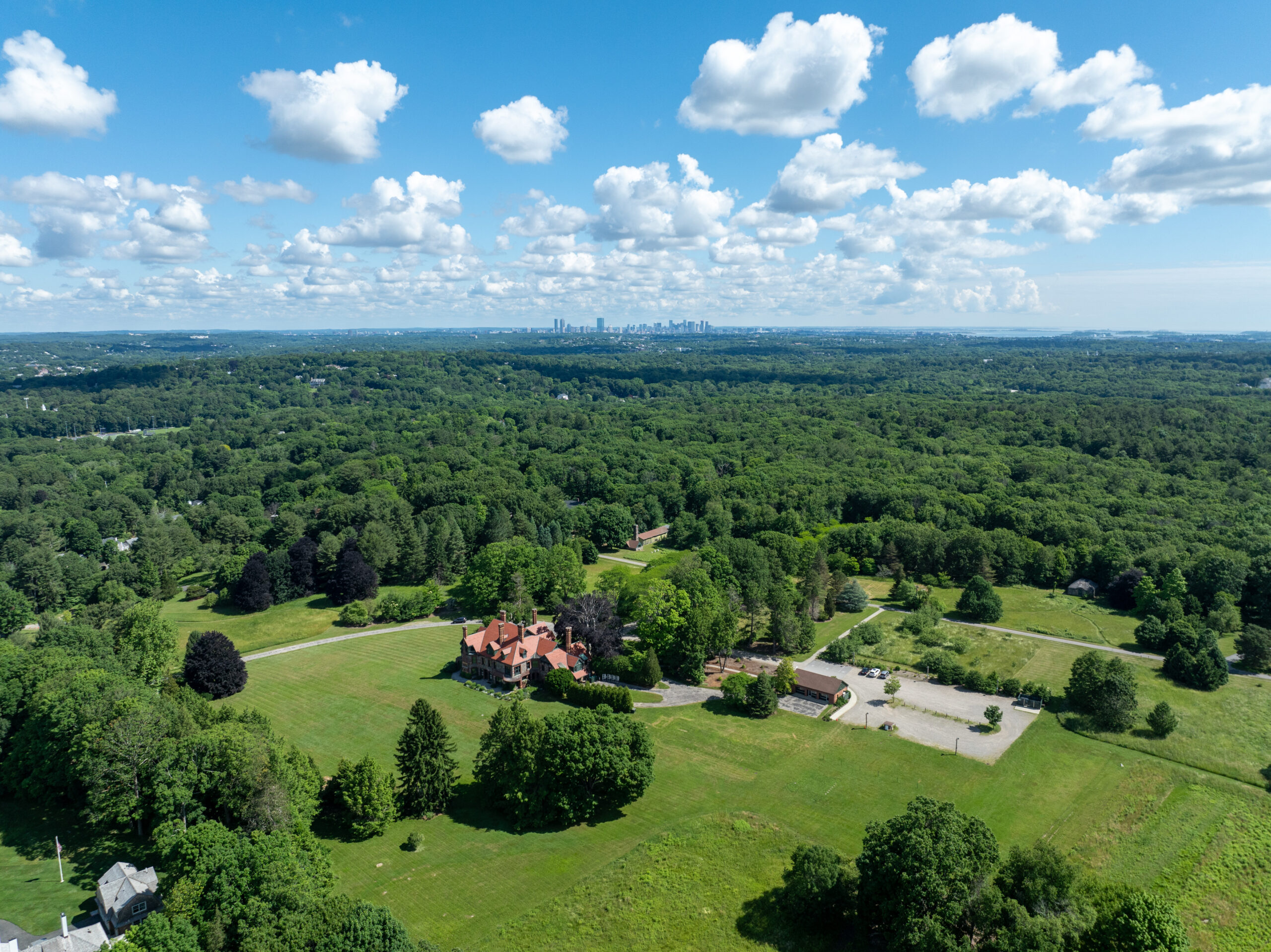
Now is the moment at Historic New England’s Eustis Estate, where the majestic 80-acre landscape includes fields, forests, and dozens of specimen trees, all cared for year-round by our dedicated landscape staff. In recent years, their work has increasingly contended with the effects of climate change, including extreme weather patterns, diseases, and pests. Of particular concern is the Eustis Estate’s hemlock grove: a mid-twentieth-century addition to the Ernest Bowditch-designed grounds that towers above the landscape and provides dense, comfortable shade on hot summer days. Drought and other stressors have impacted the grove, leading to the removal of seven hemlocks since 2017.
Without these trees, the historic character of the landscape is noticeably diminished—and the ecological impact of their loss could be even more profound. Eastern Hemlocks are native to eastern North America and are noted for their size (60-70 feet, typically) and incredibly long lifespans (hundreds of years). As giant supercentenarians, they are remarkably effective at capturing and storing carbon dioxide from the atmosphere, giving them a crucial role in the battle against climate change.
But all Eastern Hemlocks are threatened, especially by prolonged drought conditions and by the hemlock woolly adelgid, an invasive insect that feeds on the trees and often kills a hemlock within a few years of infestation. A dying hemlock tree releases its stored carbon back into the atmosphere—by the ton, depending on the tree’s age and size—exacerbating the climate conditions that impact us all and allow the woolly adelgid to thrive.
Last month, Historic New England completed a planting program at the Eustis Estate to restore the hemlock grove and improve the health and appearance of historic planting beds. Thirteen new trees were planted, including twelve hemlocks. Replacing the lost hemlocks in-kind both perpetuates a historic landscape feature at the site and supports Historic New England’s climate action goals. As the young trees grow, they will absorb carbon from the atmosphere and store it in their trunks and branches—up to two tons of it over the course of their lifespans! And to ensure that they thrive, the new trees and the surviving mature hemlocks in the grove will receive annual preventative treatments against wooly adelgid infestation.
The project also included planting two hundred Eastern Hay-Scented Ferns as groundcover within the hemlock grove and in adjacent planting beds. Like the Eastern Hemlock, the Hay-Scented Fern is native to New England and found throughout the Northeast. The fern grows from one to three feet tall, and spreads thickly in dense colonies. As they spread, the planted ferns will inhibit the growth of weeds and other invasive plants.
Completing this project has immediately rejuvenated the Eustis Estate landscape, but its lasting impacts will go far beyond appearances. We look forward to caring for these plantings to ensure that they thrive, mature, and yield long-term environmental benefits.
Written by Katherine Pomplun, Institutional Giving Officer
Landscape restoration at the Eustis Estate was supported by a Destination Development Capital Grant from the Massachusetts Office of Travel and Tourism.
1 year ago
Connecticut’s Historic Gardens
Roseland Cottage in Woodstock, Connecticut, is home to one of Historic New England’s most magnificent gardens. We talked to Roseland Cottage Site Manager Laurie Masciandaro about Roseland’s historic parterre garden, a new pollinator garden, and her work with .
Roseland Cottage is part of , a consortium celebrating the gardens at distinctive historic homes in Connecticut. Laurie, can you tell us more about the organization and your role in it?
In 2002, Roseland Cottage, along with eight other historic sites with significant gardens, wanted to increase people’s awareness of historic gardens in Connecticut, and was founded. We’ve grown to sixteen sites since then, and collectively represent four centuries of gardening in the state. So here at Roseland Cottage and other Historic Gardens sites, we’re involved in a special kind of preservation—one that’s continually changing and without a finished product. Gardens, by their nature, leave us with special questions: Is it possible to preserve something in flux? If it’s possible, should a garden remain ‘locked in time,’ or should it improve and mature? Should it reflect changing tastes and expectations, or maintain its historical appearance? All of these are important questions, but we at Roseland Cottage and the other fifteen members of have come down squarely in favor of preservation—maintaining gardens at their peak, when plantings have reached their maturity and the garden matches the vision of the designer—in order to share with the public a slice of Connecticut’s gardening history.
What is special about Roseland Cottage’s garden—what makes it historic?
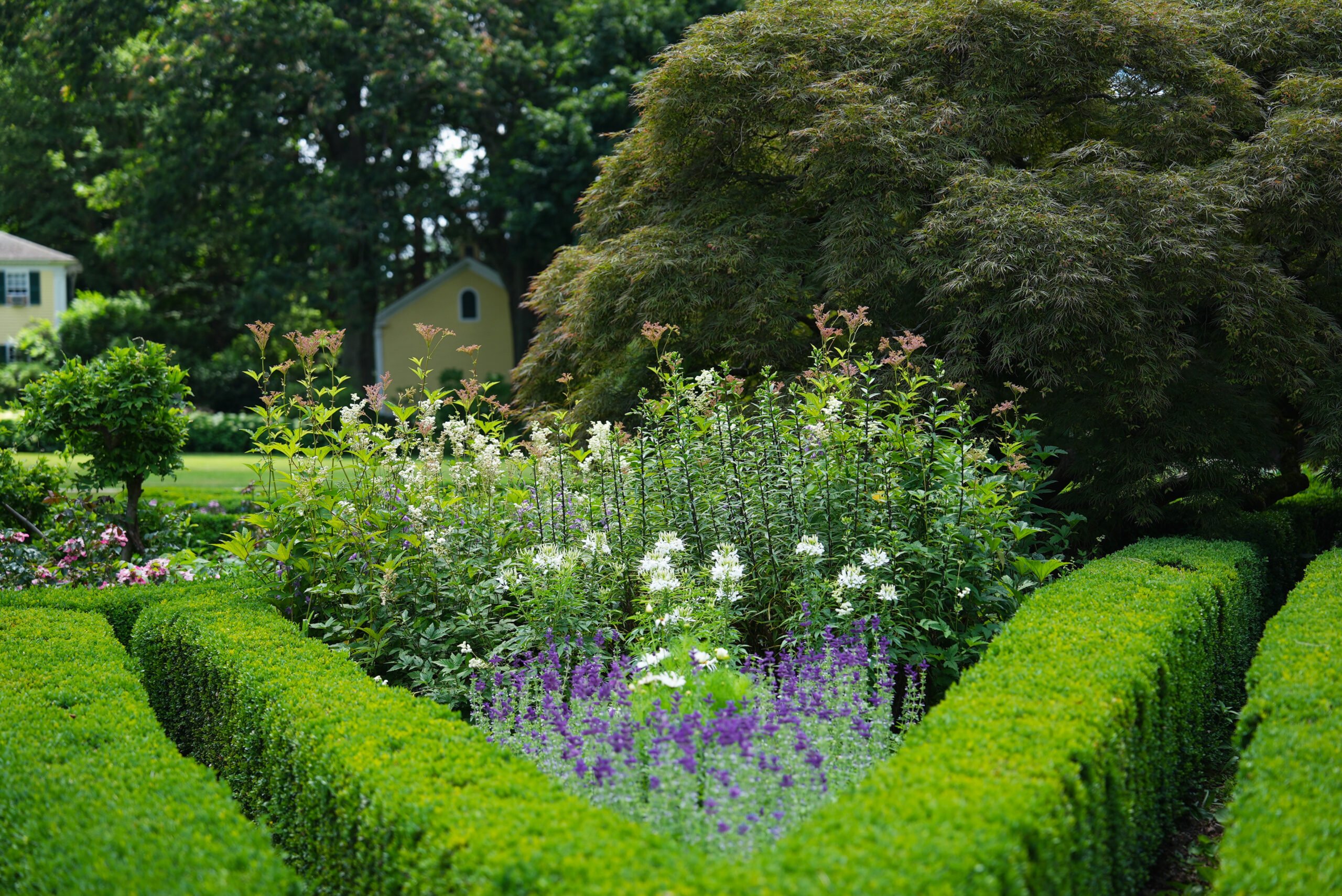
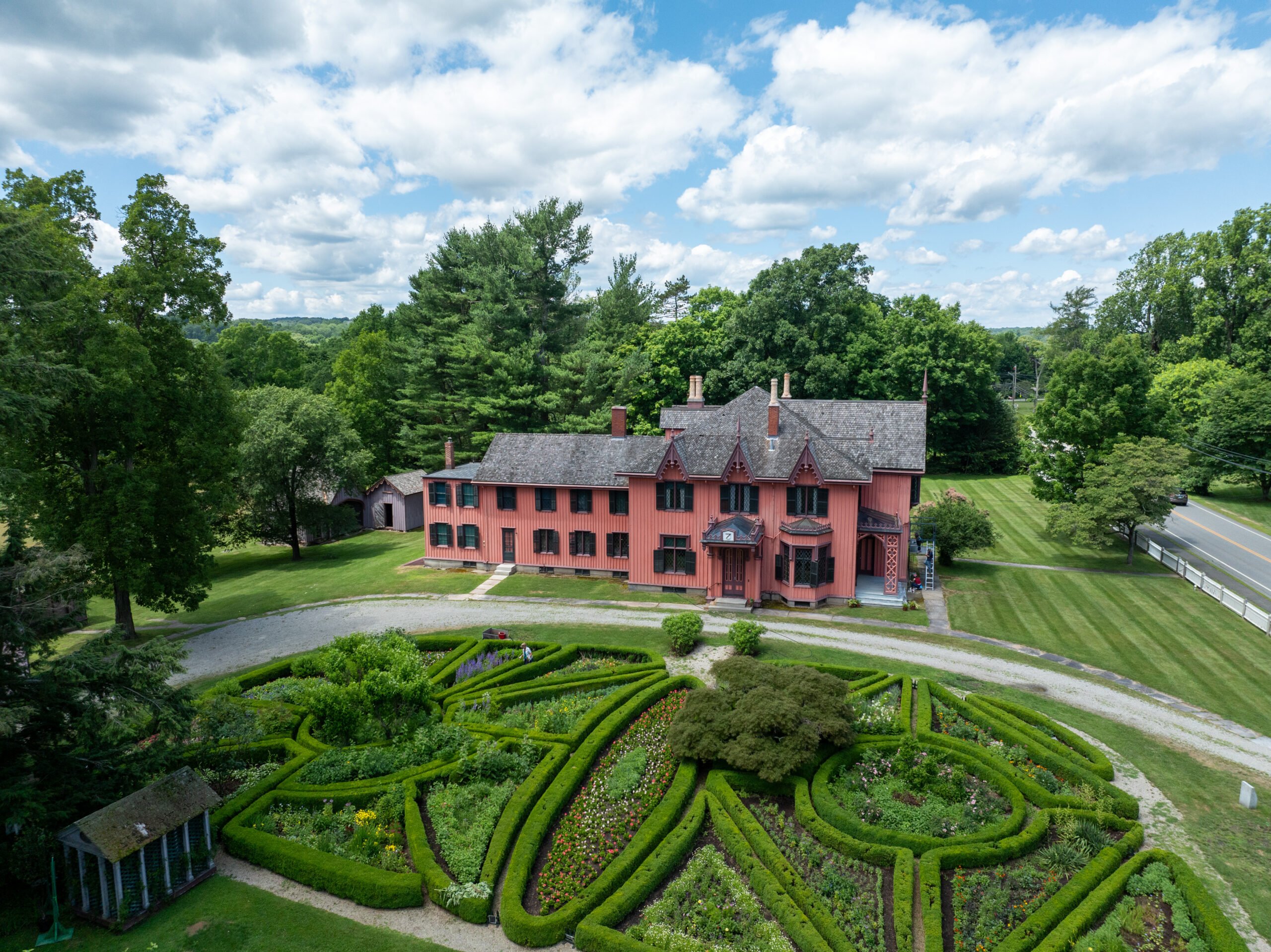
At Roseland Cottage, our pride and joy is our boxwood parterre garden. We believe it was inspired by Andrew Jackson Downing, who was an extremely influential landscape designer and promoter of the Gothic Revival style. Downing was not partial to parterre gardens—he preferred landscapes that imitated nature—but if a parterre was your wish, he believed it should have irregular curving beds and boxwood borders, distinctly marked edges, should be an extension of the house, and beds should be planted in masses of color. Downing preferred annuals for their long blooming period and we plant over five thousand of them at the end of May every year. It’s one of the factors that separates Roseland Cottage’s garden from other historic gardens, which rely almost exclusively on perennial plantings.
In your role as Site Manager and because of personal interest, you’ve done a lot of research on Connecticut gardens. What are some of the most interesting things you’ve uncovered?
Something I noticed is how the story of highlights some significant women’s stories in Connecticut. We have colonial women producing food, medicine, herbs, and flowers for their families; a successful early female industrialist; a woman architect—the fourth registered female in the country; a cash-strapped turn-of-the-century woman who influenced the course of American art; a famous author; and a woman who helped victims of Nazi camps. Many of our gardens were planned by significant designers who were among the first female practitioners in the man’s world of landscape architecture: Beatrix Ferrand, Amy Cogswell, and Englishwoman Gertrude Jeykll.
The formal parterre garden isn’t the only interesting thing about Roseland’s landscape—you also have a pollinator garden. How did this initiative come about?
We have wanted to put in a pollinator garden for a few years. We do get lots of pollinators in our parterre, but we wanted something with only native species, and we wanted to use our landscape in a way that would reflect the needs of current history. The Last Green Valley provided a grant for some of the planting, and we have begun to transform an area that was a tangled jumble of boxwoods, stray flowers, and weeds into a new garden. There is also a memorial stone and plaque in what is now our pollinator garden recognizing the service of a Korean War veteran, who died in that conflict. We can now give it the attention it deserves.
You do advocacy work and give public presentations related to Connecticut gardens and landscapes. What have you been up to lately, and where can we find you speaking in the future?
I do! I’m the designated speaker for . I love it! I’ve spoken at the Boston and Hartford Flower shows, at the new Mohegan Sun home and garden show, and to over forty garden clubs here in Connecticut. COVID moved many of those presentations to Zoom and some organizations still ask for an online presentation, which actually works very well, but speaking in person is what I really enjoy. I have crisscrossed the state many times, reached audiences on the west coast through Zoom, and next spring, I’ll speak to the Amherst, New Hampshire garden club in March.
Roseland Cottage’s gardens are open to the public from dawn to dusk.House tours take place on the hour, 11 a.m. – 3 p.m., Thursday through Sunday, until October 17.