Story Information
Samriddhi Simlai
December 2025
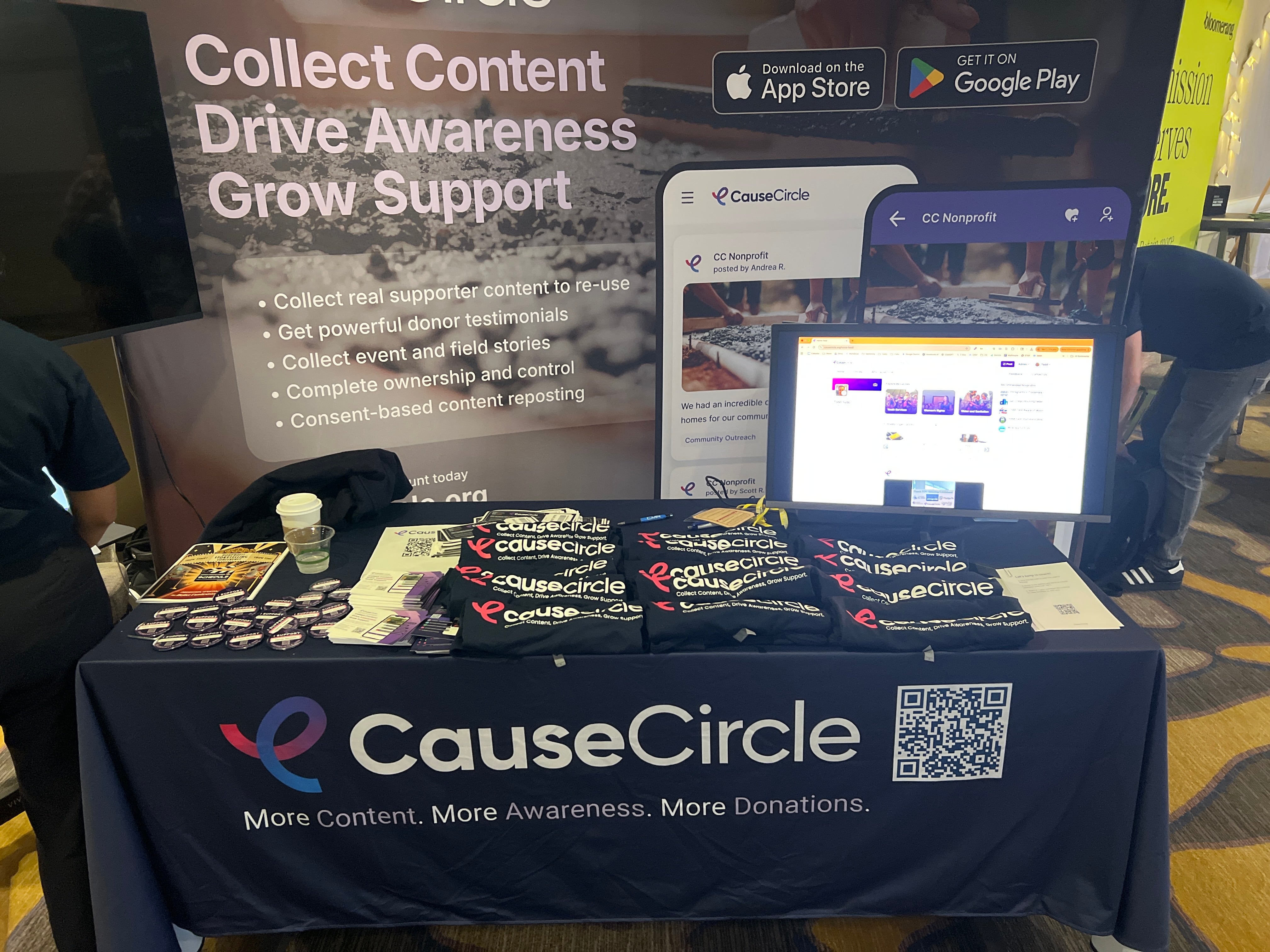
Team CauseCircle had a booth at the Nonprofit Storytelling Conference this year — a three-day gathering where nonprofit leaders come together to talk about the art and practice of storytelling. For those who haven’t attended, it’s one of the few national spaces where fundraisers, communications teams, program staff, and executive directors openly compare notes on how they capture real moments, honor the people they serve, and make meaning out of the work they do every day.
After three days of conversations at the conference — chatting with leaders between sessions, comparing notes over drip coffee, and listening to people unpack both wins and frustrations — one theme stood out:
Nonprofits are doing incredible storytelling work, but the process behind that work is still messy, improvised, and held together by a lot of heart.
Not in a negative way — in a very human way. Teams are navigating big missions with small capacities, gathering stories wherever they can, and making it all work through creativity, goodwill, and community trust.
Across roles, budgets, and missions, the reflections we heard were remarkably consistent. Here are the 10 clearest storytelling takeaways from speaking with 150+ nonprofit leaders this year.
This was one of the most honest admissions we heard.
Most nonprofits aren’t drowning in photos or footage.
They’re surrounded by meaningful moments — a volunteer comforting someone, a client saying something powerful, a spark of joy at an event — but those moments often pass without being captured.
One ED said:
“So many stories happen right in front of us… but we’re usually managing logistics instead of documenting them.”
Another joked:
“It’s like the story is always happening five feet away from whoever has the phone.”
The gap isn’t storage. It’s consistent, in-the-flow collection, especially during busy programs or events where nobody is thinking about storytelling.
This came up endlessly — and everyone smiled and sighed at the same time when they talked about it. Supporters genuinely want to help. But asking for stories, quotes, reflections, or videos is still awkward and slow.
A development director said:
“Our donors always intend to send something… and then life happens.”
Another added:
“I don’t want to feel like I’m following up on someone’s personal experience like it’s a missing invoice.”
It’s not reluctance — it’s emotional weight, timing, and unclear prompts.
Fundraising content is easier to use than it is to collect.
Almost every leader agreed:
“Real” is beating “perfect” right now.
The stories that resonate most with donors today are:
Selfie-style reflections
Candid volunteer photos
Short, imperfect videos
Honest, in-the-moment observations
“Day in the life” voices from program staff
One comms manager said:
“Our most successful post last year was literally a volunteer holding their phone sideways.”
The shift is clear:
Authenticity is the new production value.
This was an unexpectedly positive theme.
Leaders said donors now expect:
A clear human narrative
Paired with one or two meaningful data points
Not a full report
Not a dramatic story
Just a small, complete picture
One donor relations lead put it perfectly:
“A story says ‘this matters,’ and a number says ‘here’s the scale.’ Both together is what moves people.”
Storytelling is becoming more balanced and accessible — less pressure to produce the “perfect” narrative or the “perfect” dashboard.
Nobody was shy about the realities of capacity.
But instead of despair, leaders shared small creative adaptations:
“Story hours” once a month
Rotating “story captains” at events
Quick reflection prompts for staff
Intern-led story collection
Story banks that get updated between big pushes
A program director said something that stuck with me:
“We’re learning to treat storytelling like hydration — you don’t wait for a crisis to drink water.”
Teams are figuring out sustainable rhythms, even with limited bandwidth.
This was one of the most energizing insights.
Contrary to the belief that volunteers only help with tasks, many leaders said volunteers love sharing:
Photos
Reflections
Quick journals
Voice notes
“Why I volunteer” snippets
One youth nonprofit staff member said:
“Once we gave volunteers two prompts and an example, they took it and ran.”
Another said:
“Volunteers see things we miss — their perspective is gold.”
The appetite is there.
The opportunity is simply under-structured.
This year’s conversations around AI were calm, nuanced, and grounded.
Teams said AI helps with:
Drafting social posts
Summarizing interviews
Creating variations of content
Organizing story notes
Transcribing audio
But they were equally clear about what AI must not do:
Change community voices
Add artificial emotional weight
Replace lived-experience narratives
One communications lead said:
“AI can help me get unstuck. But it can’t touch the heart of the story.”
There’s a thoughtful balance emerging — one that respects both efficiency and authenticity.
This shift felt important and values-driven.
Leaders spoke openly about:
Emotional readiness
Agency
Cultural context
Language accuracy
Avoiding extractive framing
Letting people revise or retract their stories
A youth development leader said:
“We ask people, ‘Do you feel okay being visible today?’ Not ‘sign this form.’ And the difference shows.”
This reframing strengthens both community trust and donor trust.
GivingTuesday, year-end campaigns, galas, and program launches still bring stress:
Last-minute photo hunts
Missing assets
Disorganized folders
Scrambling for quotes
Multiple people approving across email slacks
But leaders also shared that they’re building more proactive habits:
Evergreen stories
Pre-interviewed donors
Volunteer “media buddies”
Internal “story rounds” every quarter
A living story bank
One ED said:
“We’re not perfect, but at least we’re not starting from zero anymore.” Progress, not perfection, is the trend.
This was the most hopeful theme of all.
Leaders are rethinking:
Whose voices appear in stories
Who gets to frame the narrative
How communities see themselves represented
How power shows up in storytelling
What “authenticity” actually means
One person said something I wrote down instantly:
“We’re not here to extract stories. We’re here to accompany them.”
It reflects a shift toward partnership, agency, and co-creation — and it’s shaping the future of nonprofit storytelling.
Talking to 200+ nonprofit leaders left us with a deep sense of respect for the field.
This year wasn’t defined by complaints or overwhelm.
It was defined by:
Ingenuity
Thoughtful adaptation
A stronger values foundation
A growing interest in community-led storytelling
And a shared desire for storytelling that feels natural, respectful, and joyful
The message was clear:
Nonprofits don’t need perfection. They need processes that honor how their work actually happens — among people, in small moments, across many hands.
And they’re finding their way there, one story at a time.
If you’d like the reflection prompts, volunteer story cues, or the mini-guide we shared at the conference, reply — we’re always happy to share.
By Samriddhi Simlai
Samriddhi or Sam is a Seattle-based marketing professional who loves to be curious and find stories in data. Samriddhi enjoys chats about mission-driven tech, product, growth and coffee. Say hi at sam@causecircle.org. Causes Sam is passionate about: Health Equity, Climate, DEI, Art & Culture Preservation