Story Information
Story Statistics
2,345 Reads
80 Shares
320 Likes

2 years ago
The Power Behind the Reaching Children’s Potential Program: Parents!
Around the world, parents, especially mothers, play a critical role in preventing malnutrition and supporting the growth and development of their children. Before birth, mothers’ nutrition, health practices, and mental well-being impact the development of their babies in utero. In infancy and childhood, by supplying nutritious food, modeling good hygiene habits, and supporting cognitive development via play and stimulation, parents can ensure their children reach their full potential. Although the RCP program provides instrumental support and education to improve health and nutrition outcomes in the Ukwega Ward, it is a parent-driven effort – impossible without the enthusiastic participation of RCP mothers and fathers!
Supported by RCP Caregivers and volunteers, parents are the primary implementers of the RCP program components. They attend educational workshops, prepare nutritious food for their children, and use and maintain household technologies like handwashing stations, Earthboxes, chicken coops, and fuel-efficient stoves. Involvement in the RCP Program requires significant time and effort, but parents enjoy participating in the program and are enthusiastic about the positive changes they have experienced. RCP parent Inueni Ngalembula from Mkalanga village reported that she regularly participates in RCP activities like home visits, monthly weighing of her baby, preparing nutritious meals, and caring for the RCP technologies. When asked about her favorite RCP activities, Inueni said “I enjoy participating in [workshops] because I learn a lot of new things that have grown my capacity, ability, and knowledge on childcare and parenting as well.” Inueni has also seen a positive impact on her children and mentioned that nutrition education, healthcare, and technologies “…have positively impacted our ability to get vegetables from our home garden and has made it easy for us to get food…it has helped my children be in [a] good health condition.”
RCP mother Angela Ngalembula from Mkalanga feels that the RCP Program has “…enabled me as a mother…through seminars which I have been attending at the RCP Centre as well as home visits where I receive knowledge transfer from caregivers. The seminars have been so good to my family [especially] nutritional education…I did not have the knowledge before regardless of all the nutritional sources that are found within our localities and how to use them it was a challenge to me but through Global Volunteers’ education offered through workshops has [improved].” Angela’s favorite RCP activity is the monthly measurement because “…it helps me to know the progress of my children in whatever stage they are in and where to put [the most effort] to make sure they truly meet their full potential.” She also reports that educational workshops on hygiene have helped her family to be free from stomach diseases and that the practice of handwashing has had a positive impact on their life.
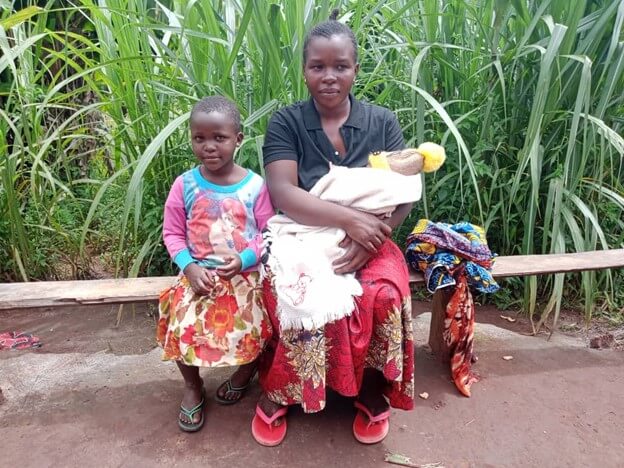
Jenifa Kikoti from Mkalanga regularly attends home visits, workshops, and monthly measurements and is responsible for maintaining her family’s RCP household technologies including a chicken coop, Earthboxes, and a handwashing station. Jenifa stated “I have enjoyed all RCP activities but the most enjoyable activity to me is taking care of technologies because it’s a direct impact you can see. I take care of the earth boxes by watering them. I’m enjoying the vegetables…as well as the chicken coops. I know sometime later I will be harvesting protein from chickens.” Jenfia also described the impact of the RCP Program on her children “…using the knowledge I acquire from the workshops, especially that of hand washing and hygiene to improve sanitation around my home has reduced the frequency of illness for my children…my newborn has fewer visits to the health facilities because he doesn’t have stomach illness like his [older] brothers.”
Parent participation in the RCP Program has a positive impact on children’s physical health but it also can support children’s mental development and form positive habits and emotional health. Global Volunteers’ RCP Caregiver Supervisor Thekla Mushi highlighted this important role saying, “It is important for the parents to be involved and participate in the RCP Program…both fathers and mothers can provide consistent and positive messages to their child. This can help a child to have a sense of security and support, which can accelerate the child’s overall well-being. Parents’ involvement is very important at every stage of child development for the betterment of future generations.”
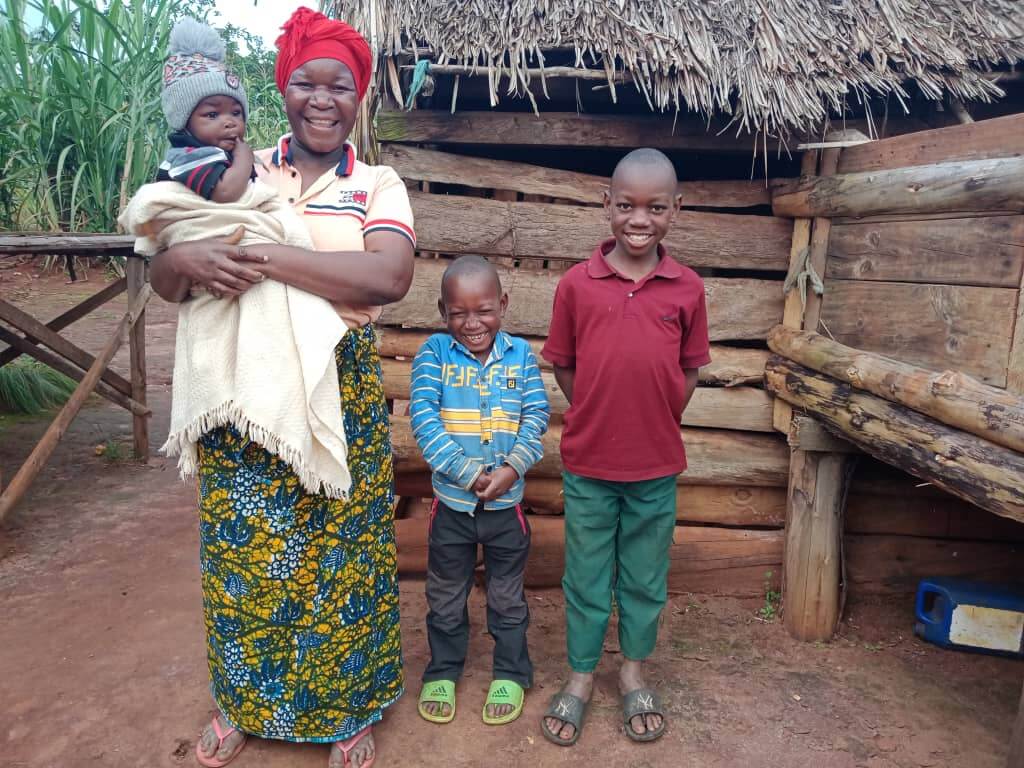
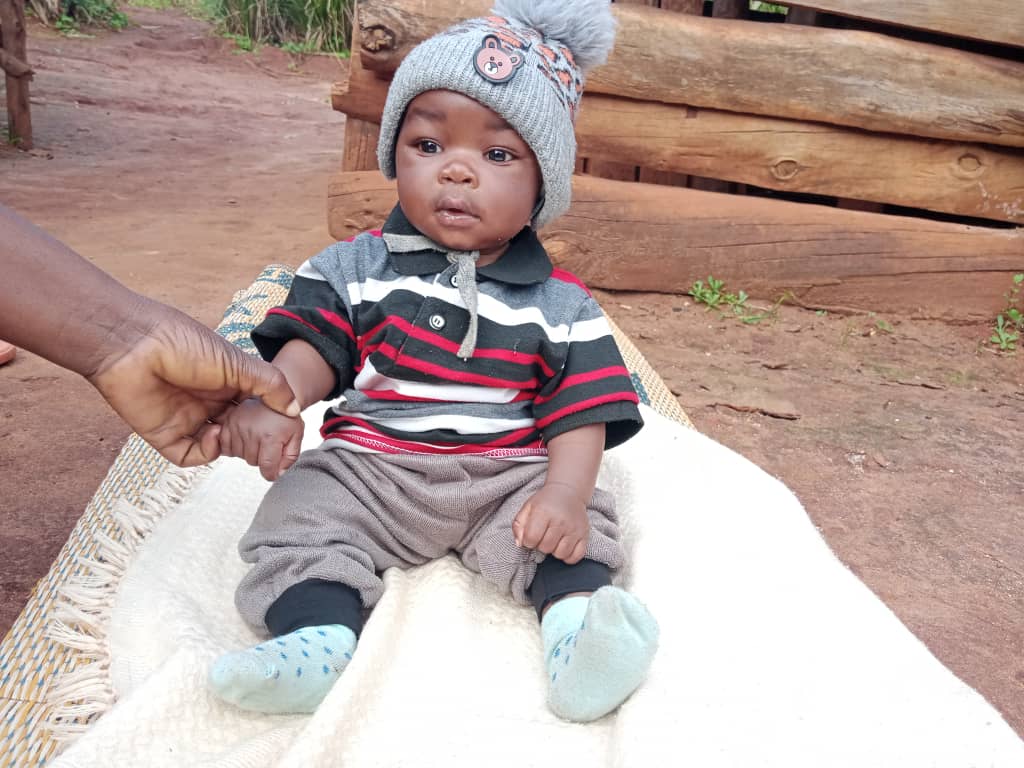
Parents in the Ukwega Ward have already made incredible progress. Since the beginning of the RCP Program in 2017, stunting prevalence among RCP children has dropped from 37% at baseline to 16% – a 57% reduction in the number of stunted children. By volunteering in Tanzania or donating, you can support the RCP Program and provide RCP parents with the resources and support needed to continue the challenging but rewarding work of transforming their children’s futures.
Become a Global Volunteer in Tanzania! Request information here >>The History of the Reaching Children’s Potential Program from Anse-la-Raye to Ipalamwa
2 years ago
Celebrating The “Holi” Festival – Kathmandu, Nepal!
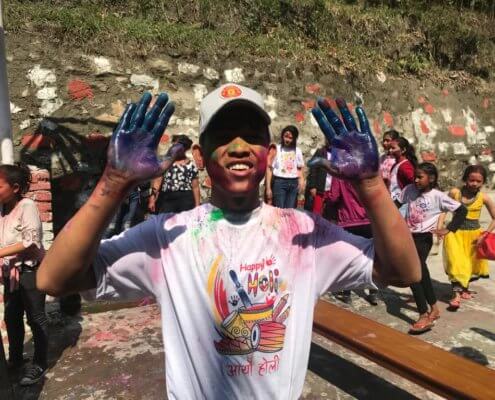
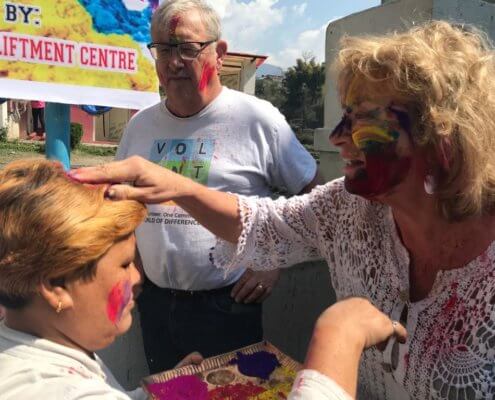
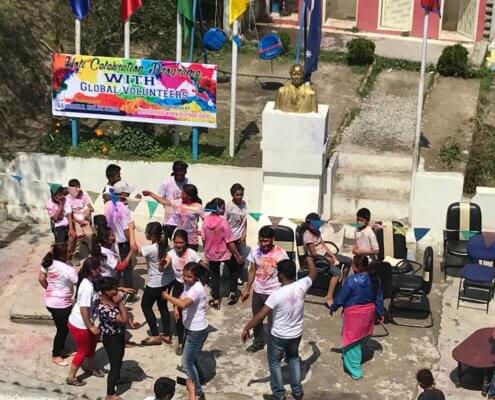
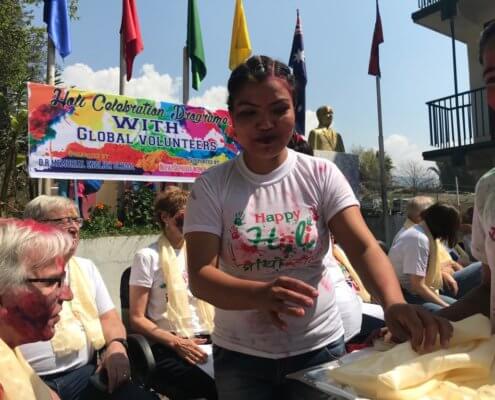
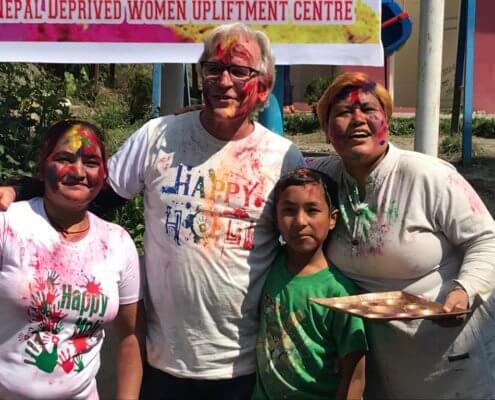
The Holi festival, known as “Phagu Purnima” in Nepali, is named after the mythical demoness Holika, and is one of the most anticipated annual celebrations in Nepal. A three-day festival of color and joy, Holi is observed on the full moon day, which falls either late February or early March. If you’re fortunate enough to serve on our Nepal Program during Holi, you can celebrate with the youth and staff of the DR Memorial school and children’s home, and participate in events with adults and children in the wider community. Kathmandu surely takes on a new look during Holi!
People observe the first festival day by decorating wooden poles and burning them through the night to symbolize the burning of the old year. The erection of a chir (sacred pole) symbolises the tree on which Hindu deity Krishna is said to have hung milkmaids’ clothes while they were bathing in the Jamuna River in India. The women dress in red saris and circle the poles praying for blessings. The custom originated in the Basantapur Durbar Area of Kathmandu, and today the chir is decorated with colorful cloth, reminding the people to prepare for the upcoming celebrations.
On the second day, bonfires are lit to symbolize the death of the demon Holika, which signifies good winning over bad. According to mythology, the “devil king,” Hiranyakashyap forced everyone to worship him, however his son Prahlad did not. He was loyal to Lord Vishnu. Hiranyakashyap plotted with his daughter Holika to kill Prahlad by walking through a burning fire. (Holika had been blessed with a resistance to fire) however, due to his devotion to Lord Vishnu, Prahlad survived while his sister Holika was burned to ashes!
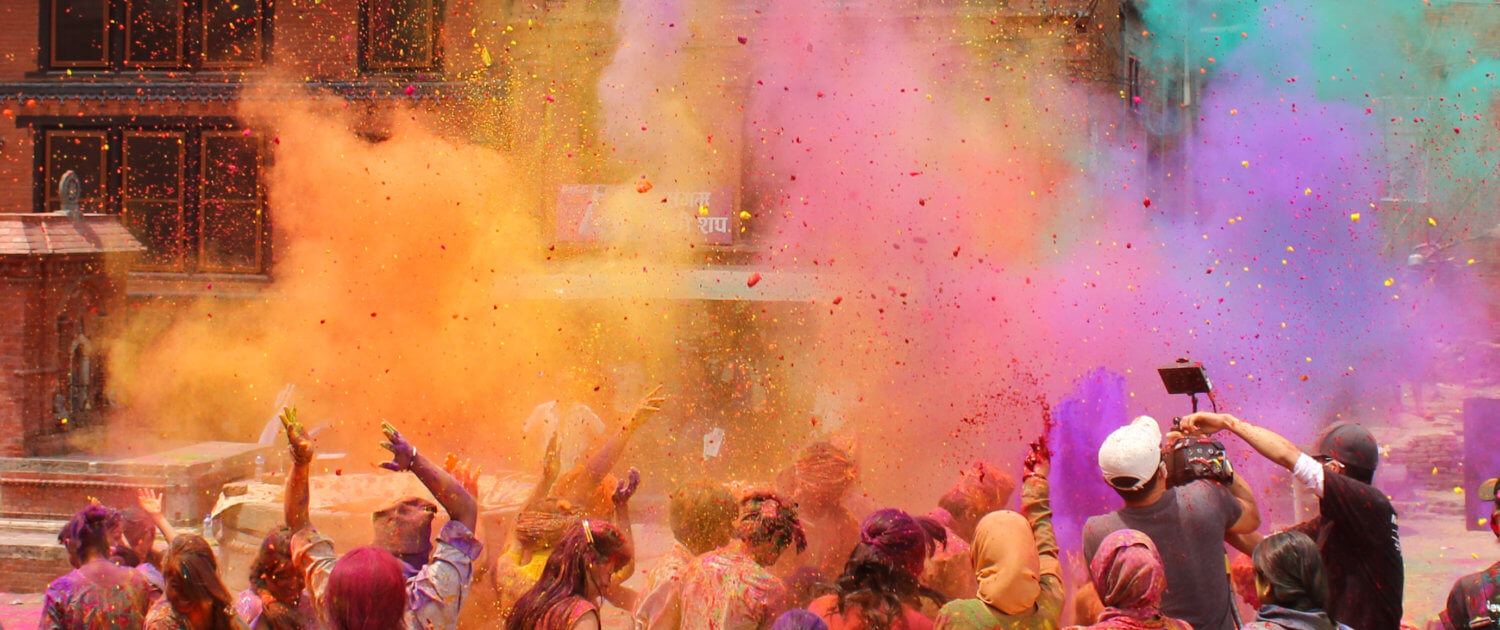
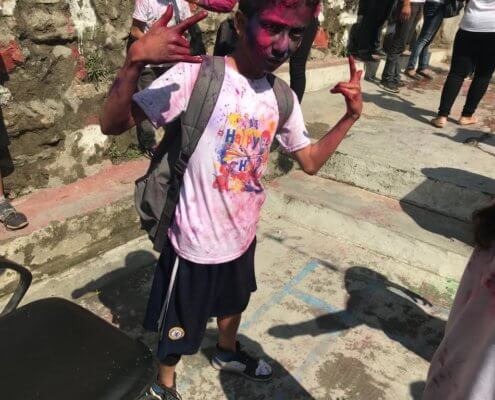
This iconic day is the one most often seen and reported on in news and in films. It’s a day of color and joy when people gather in masses on the streets, as families and in schools, to celebrate. Colorful water balloons, paint, and perfumed powder are thrown on all present – children and adults, women and men. The powdered pigment (called “gulal”) represents the bonfire of the second day. Each color symbolizes a force in life, and therefore color and life are inseparable. For instance, blue is the color of the revered god in Hinduism, Lord Krishna. Green symbolizes new beginnings, harvest, and fertility, and is also the sacred color of the Muslim community. In addition to throwing colored powder, there are feasts, dancing and singing – with everyone wishing each other, a “Happy Holi” – the festival of friendship, Love and new beginnings!
You might also like:
Experience Kathmandu as a Volunteering Destination
2 years ago
“There’s No Way to Describe the Joy”
The faded and peeling murals and empty classrooms at Sagrada Familia bear witness to the punishing lockdown during the pandemic. But the children’s cheery demeanor and spring blooms on trees and stems belie the stress of 19 continuous months of isolation. On the first service program back to the children’s home in Ventanilla, Peru, Global Volunteers team members experienced a mix of emotions: relief, to be sure, at seeing the resident children’s healthy smiles. But also gratitude for the welcome into a safe sanctuary, dismay for the absence of more than 1,000 impoverished day students who languish at home, and trepidation knowing the struggles still aren’t over for the frazzled staff. We take a look at the ebullience in the teamwork of volunteers and students, each day concentrating efforts to brighten up neglected exteriors, equipping dusty classrooms, stimulating young minds, and anticipating better days ahead.
Washington retiree and seven-time Global Volunteer Suzanne Popp has prepared an impromptu art class for second- and third-year high school students only to discover the children coming in the door appear to be several years younger. With a knowing shrug prompted by a week of changing schedules and last-minute surprises, she squints and asks: “What would you like to paint today?”
Nurturing her creative instincts after a full career in sales, Suzanne is eager to share her excitement for watercolor washes, palette progressions and elegant silver leaf prints – art expressing inward longing and outward promise.
Girls and boys press around her, careful not to intrude on each other, but eager to accept a sheet of paper and a makeshift roller with which to press their leaves into leftover latex paint purchased for a labor project the day before. Instantly, three girls from yesterday’s class rush through the door to greet la profesora. “We missed you,” they giggle.
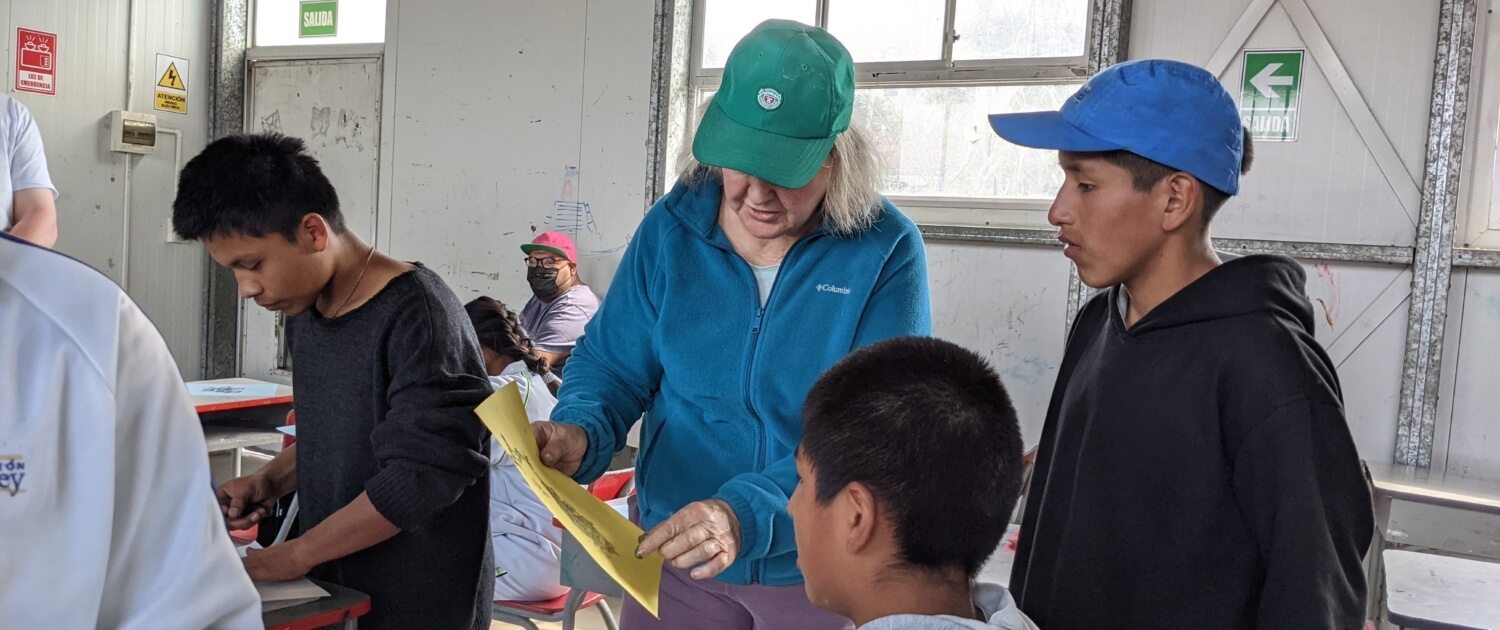
“There’s no way to describe the joy of having children running up to you and hugging you,” Suzanne affirms. “They’re so grateful to have us working with them.” As she instructs them to draw a free-form tree to paint and spray with a water-alcohol mix, she stops to answer a question shyly asked by a young boy in English fragments. She replies with a mix of equally fragmented Spanish and English. “It takes a lot of courage to use their English skills,” she asserts. “But, they’re trying, and it’s really impressive how hard they work at it.”
“There’s no way to describe the joy of having children running up to you and hugging you.”
Peru Volunteer Suzanne Popp
Through the open windows of a nearby classroom, young voices explode in harmony first in English, then Spanish, ending in screams of delight. “Very good, getting better. Let’s try it again and this time, let’s sing in very quiet voices,” says six-time Global Volunteer Kurt Jaeger, and hometown choir director. Three days are left to practice the song for the community farewell celebration honoring the team’s work together with the children. Kurt fits these rehearsals in between labor assignments – painting chairs, desks and walls – and the students’ class schedules. Music, he knows, bridges language gaps, transcends inequities and weaves a unifying thread throughout the two weeks of service.
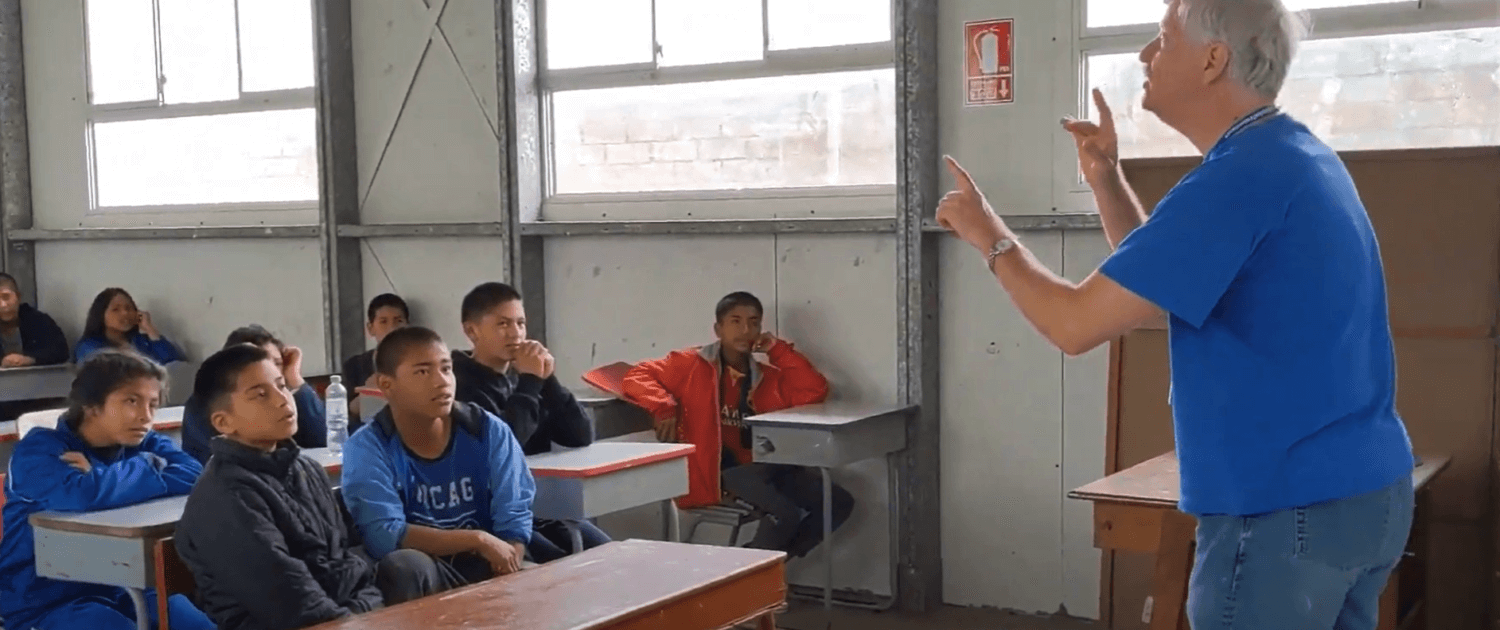
“I see this community as a source of goodness in the world,” Kurt says simply. “Miguel and the people who work with Miguel are teaching these kids how to be good human beings; how to be productive, caring and loving. He’s making the world a better place… by instilling those values in the children.” That’s why he returned as soon as the program resumption was announced. “Our role is to help make that happen. I see my role as providing skills and resources they don’t have. For instance, there’s no one here to lead a choir, so when I’m here, I can do that to help broaden the children’s experience.”
“I see this community as a source of goodness in the world.”
Peru Volunteer Kurt Jaeger
Outside the metal shop, desk frames are lined up along a retaining wall where girls and boys as young as 5 and as old as 17 share brushes and soda-bottle paint cups of primer and top coat. They position themselves atop narrow strips of cardboard intended to catch paint drips, but as more kids arrive, the careful organization dissolves into a haphazard swarm of happy “worker bees” surrounding the volunteers buzzing with Spanish and English conversation.
“It’s remarkable how these kids work together – the older ones helping the younger ones, patiently filling paint cups – and finding chairs for volunteers to sit on,” noted first-time volunteer, Las Vegas sales director Mel Shingleton.
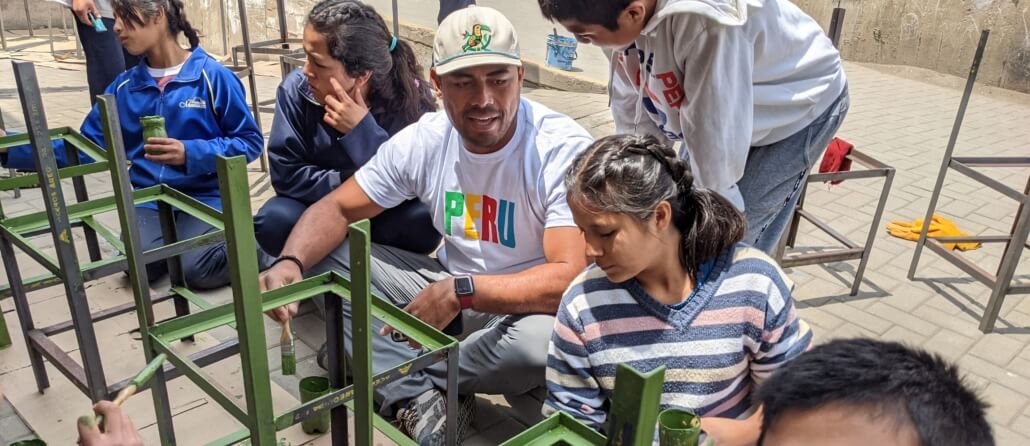
Mel’s childhood friend, two-time Peru Volunteer Casey Brooksby brought his 14-year-old son Boston with him to Sagrada Familia, hoping to share the inspiration of harmony and hope he found here just three years before. The pandemic delayed his planned return. “I was ready to come back as soon as the program reopened,” Casey asserted. “This is where I knew I wanted to bring Boston.” In his youth, Casey fulfilled his mission with the Mormon Church in Peru and found Global Volunteers’ work in the children’s community most closely matched his devotion to service. “I love the people of Peru and have kept in touch with many friends and the family I lived with,” he continued. “I have, over the years, felt very strongly that I needed to return and help where I can.”
“I needed to help where I can.”
Peru Volunteer Casey Brooksby
Casey and Boston leapt into action the first day onsite with Mel and four volunteers wielding scrapers, rollers, brushes and gallons of paint to restore a building facade with a dozen resident teens. The second day found them building bunk beds in the carpentry shop, and by the third day, they were outnumbered by throngs of children at the metal shop where newly constructed desks and chairs were being primed and painted. It was the dominant project for the rest of the week – with a new shift of students arriving each morning and afternoon to work with the volunteers.
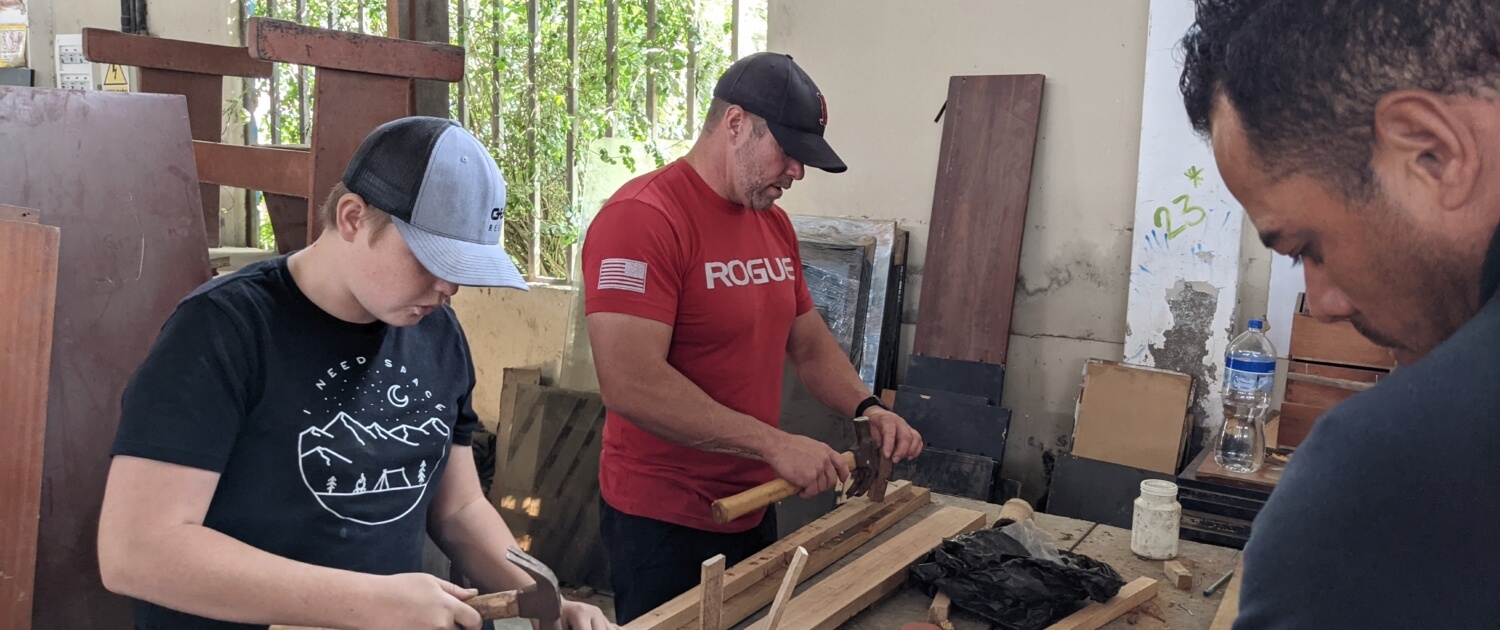
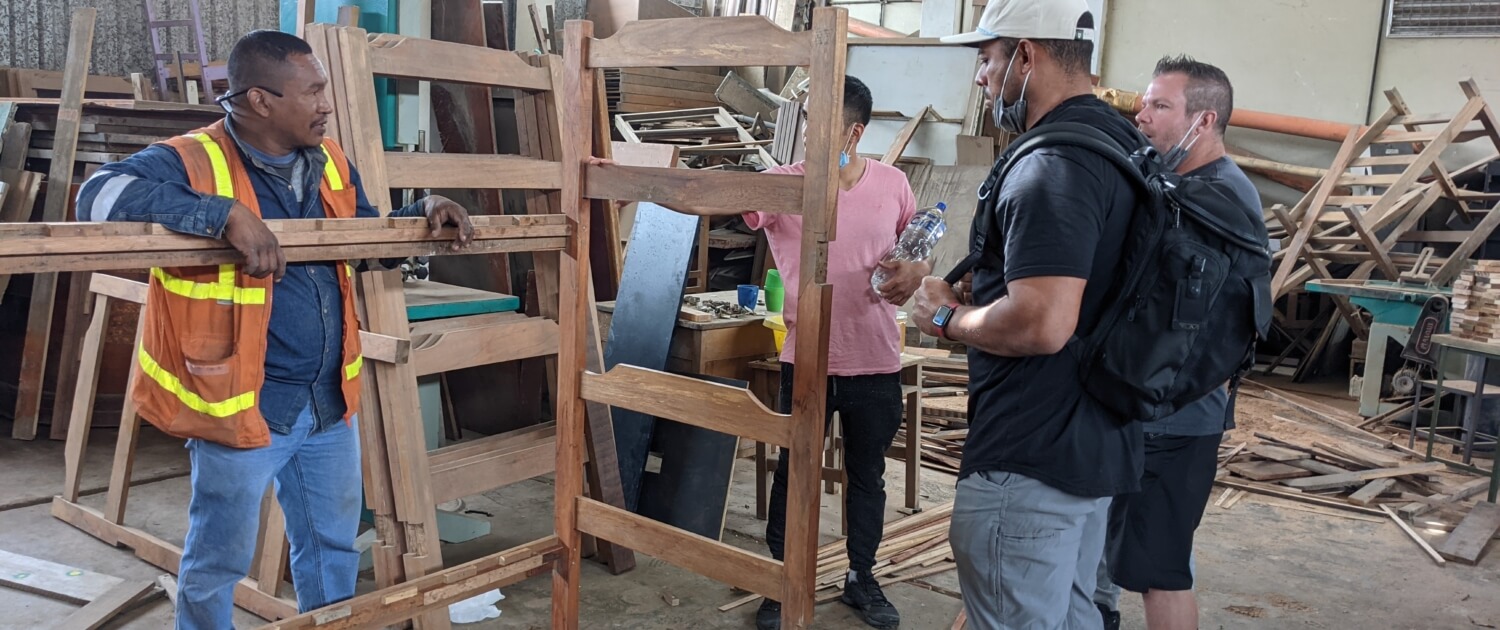
“It’s nice to be around people who are generous and caring, who genuinely love and help others. It’s inspiring and beautiful,” says Mel. “The tasks at the school have been pretty simple but fun and interactive. I have not seen one child complain about the work. Each one is eager to jump in and help.”
In the kitchen, Global Volunteers Nick Philbrook and Suzanne’s husband Ken are robustly chopping vegetables for the lunch meal for more than 200 students, staff, and volunteers.
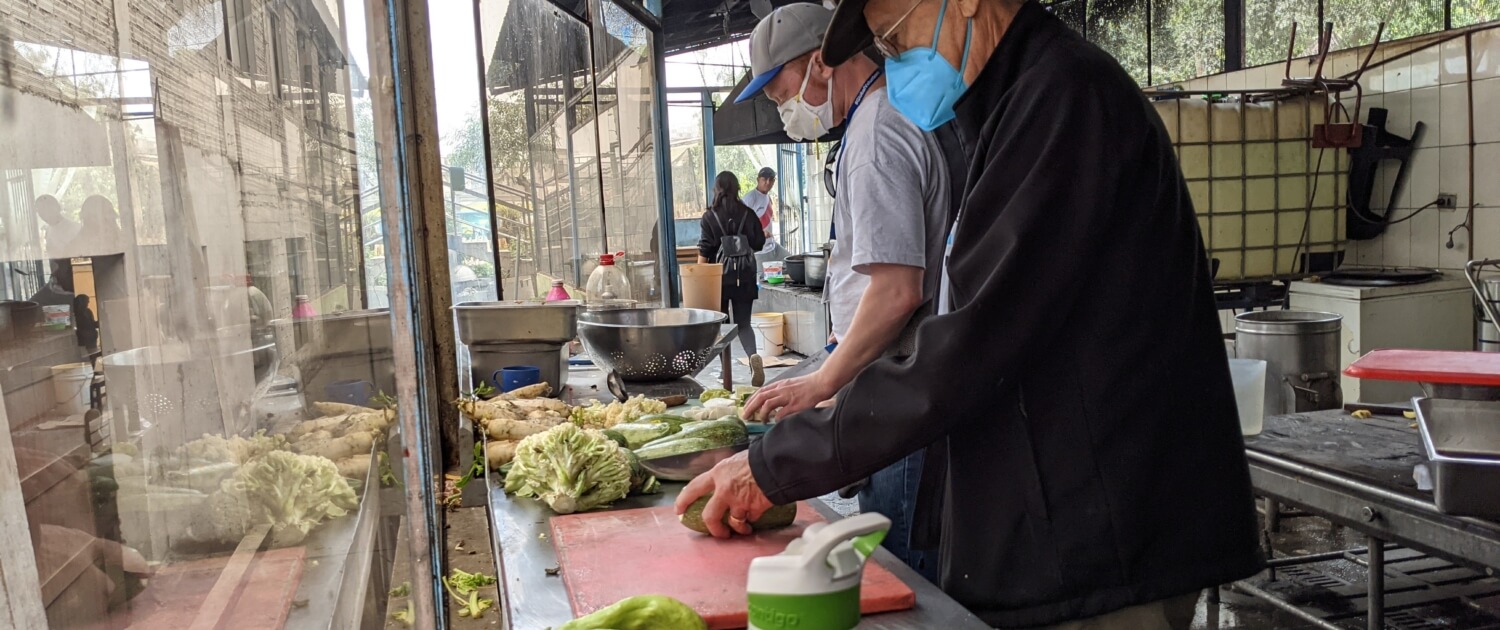
“Each day has been very different in many ways, but one thing is always constant, and that’s the children’s welcome to us,” Nick says. “For instance, today when we arrived, they were practicing a national dance on the soccer field. They immediately invited us in to dance with them – patiently instructing us and encouraging us to follow their lead.”
“Each day has been special in its own way and taught me something new,” Mel added. “Today it was gratitude. Not gratitude for what I have or blessed with temporally. But gratitude for this earthly experience and means to be here and to give of my time, energy, and spirit. Gratitude for the energy and spirit of these children of our Heavenly Father. And the bright smiles and love they each share. I love the quote by Jeffrey R. Holland: ‘Don’t wait to live, this isn’t a rehearsal. This isn’t a dry run, this isn’t a pre-performance routine. This is it. This is real life. Don’t wait, savor every minute.’ Well, today we lived!”
Request information >>Children’s Community in Peru Looks Beyond The Pandemic